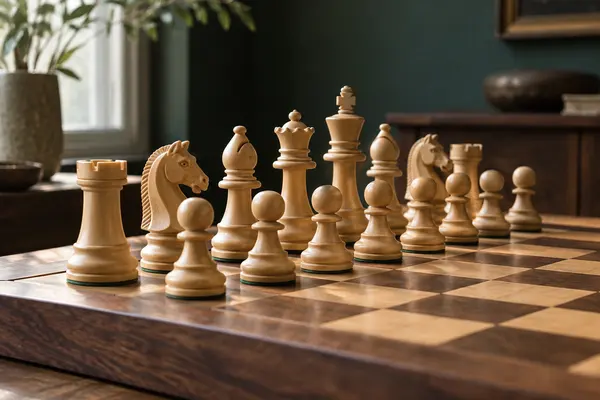
- Learn the six pieces
- Add the special moves
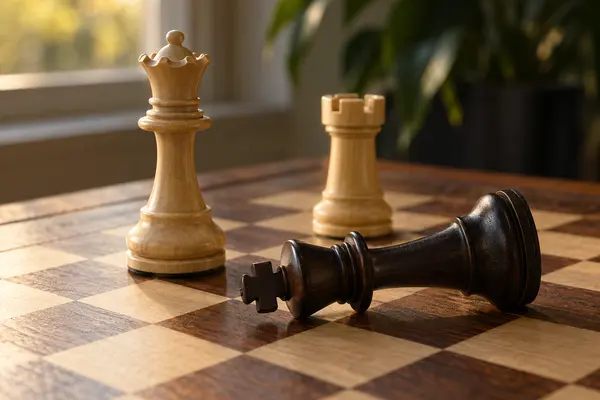
- Aim for checkmate
- White moves first
THE PIECES
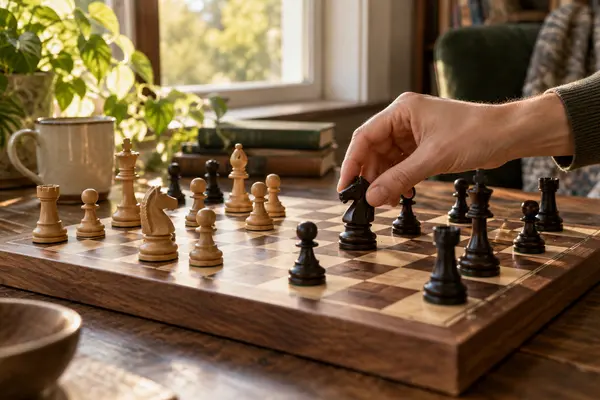
One rule per piece
Each piece has one simple way of moving. The knight is the only one that jumps over others.
Pick a piece doodlechess
Updated
CHESS, FROM THE OFFICIAL RULES
Six kinds of piece, three special moves, one goal.
Chess looks complicated from across the room. Up close, every piece follows one short rule, and the whole game aims at a single thing: trapping the other king. Here is how it works, in plain English, based on the FIDE Laws of Chess.
Plain English, with the sources linked.
YOUR move
See how each piece moves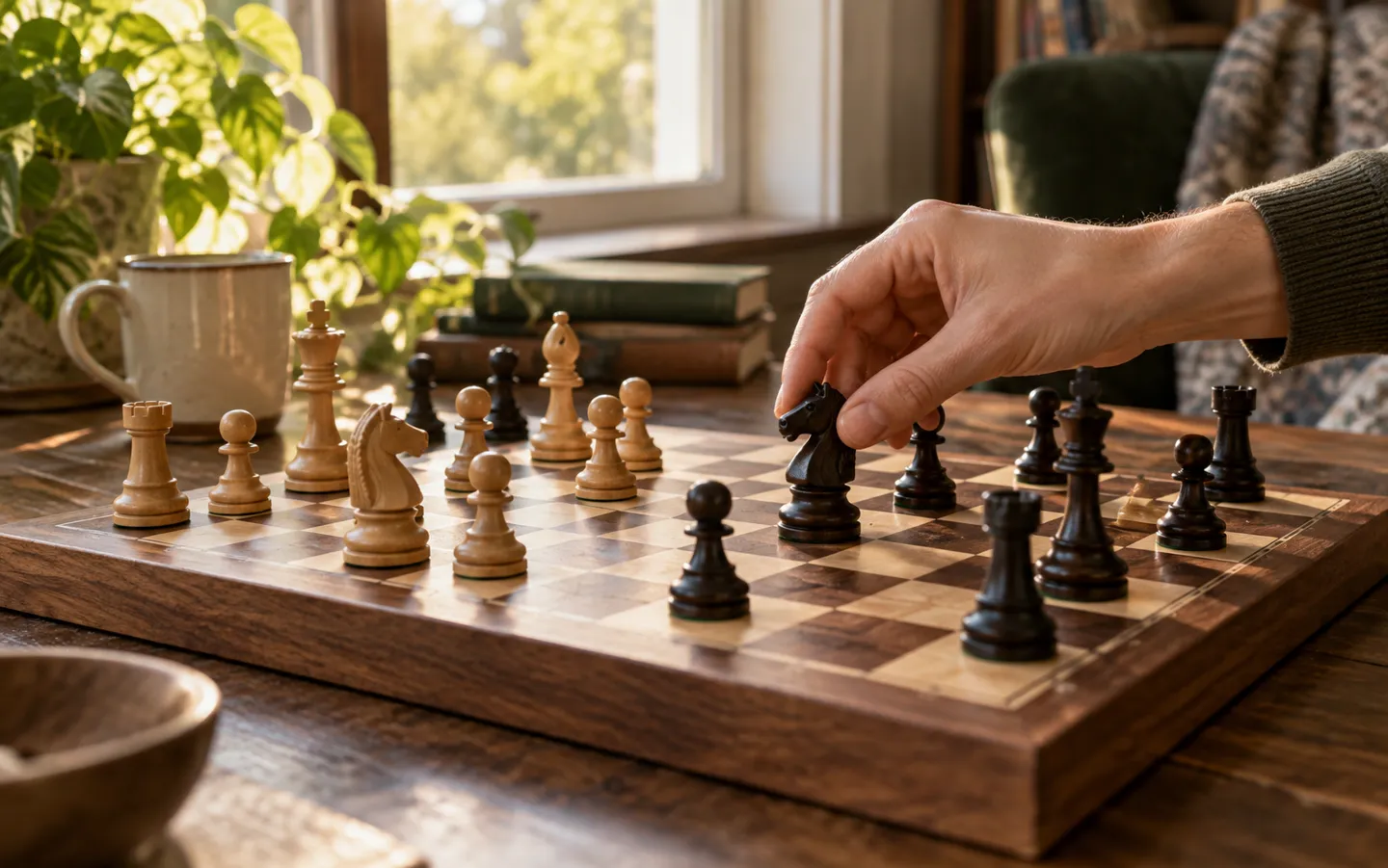
THE BASICS
Each player aims to attack the other king
so that it has no legal way out: checkmate.
THE PIECES
Each piece has one simple way of moving. The knight is the only one that jumps over others.
Pick a pieceTHE SPECIAL MOVES
Three extra rules that surprise most beginners. Learn them once and you know the whole game.
The special movesTHE ENDING
Checkmate wins it. Some games are drawn automatically when nothing is happening any more.
How games endPICK A PIECE
Choose a piece to see where it can go from the middle of an empty patch of board. The wording follows the FIDE Laws of Chess, the rules used in rated games worldwide.
Every piece except the knight is blocked by anything standing in its way. All pieces capture by moving onto an enemy piece's square, except the pawn, which captures diagonally.
TWO RESULTS WORTH KNOWING
Two findings people often quote about chess,
and what they actually say.
3½ to 2½
Deep Blue against the world champion
IBM's Deep Blue beat Garry Kasparov over six games in New York, the first time a computer defeated a reigning world champion under standard tournament time controls. A year earlier, Kasparov had won their first match 4 to 2.
MACHINE · 1997
24 studies
Chess lessons and school results
A meta-analysis of 24 studies, with 2,788 pupils taught chess, found a moderate overall effect on maths and reading, larger for maths. But none of the studies used an ideal design, so the benefit may be smaller than it looks.
MINDS · 2016
Neither result says chess is magic. One shows how far computing came; the other is a reason to play chess for its own sake, not as a guaranteed shortcut to better grades.
YOUR FIRST GAME
Turn the board so the corner square nearest your right hand is light. White moves first, then you take turns.
No move is allowed that puts or leaves your own king under attack. If you are in check, your next move must get out of it.
Move the king two squares towards a rook, and the rook jumps to the square the king crossed. Neither may have moved, and the king may not be in, pass through or land in check.
A pawn that reaches the far side becomes a queen, rook, bishop or knight. And a pawn that moves two squares can be taken en passant, but only on the very next move.
CHESS FACTS
Chess first appeared in India around the 6th century CE and had spread to the Middle East and Europe by the 10th. Its forerunner, chaturanga, takes its name from a Sanskrit word for a battle formation.
A hoard of 93 gaming pieces from at least four chess sets, mostly carved from walrus ivory in the late 12th or early 13th century and probably made in Norway, came to light on the Isle of Lewis by 1831.
That is how many positions IBM says Deep Blue could evaluate when it beat the world champion in 1997.
Under FIDE rules a game ends in a draw if the same position appears five times, or after 75 moves by each player with no pawn move and no capture. After 50 such moves, a player can claim a draw.
In rated play, if you deliberately touch one of your own pieces you must move it, provided it has a legal move. Touch an opponent's piece and you must capture it if you can.
QUICK QUESTIONS
Short answers to the questions beginners ask most.
Who moves first in chess?
White always moves first, and the players then take turns. The board is set so that the corner square nearest each player's right hand is a light square.
How does the knight move?
The FIDE rules say the knight moves to one of the nearest squares that is not on its own rank, file or diagonal. In practice that is an L shape: two squares one way and one to the side. It is the only piece that can jump over others.
What is en passant?
If a pawn moves two squares on its first move and lands beside an enemy pawn, that enemy pawn may capture it as if it had moved only one square. The capture is only allowed on the very next move.
Can I promote a pawn to a queen if I still have my queen?
Yes. A pawn reaching the far rank must become a queen, rook, bishop or knight of the same colour, and the choice is not limited to pieces that have been captured, so you can have two queens.
Does learning chess make children better at maths?
The evidence is mixed. A 2016 meta-analysis of 24 studies found a moderate overall effect, larger for maths than reading, but none of the studies used an ideal design, so the authors urged caution.
What should I check before buying a chess set?
Check that the pieces and board are in proportion. For tournament play FIDE asks for Staunton-style pieces with a king about 95 mm tall, a base 40 to 50% of each piece's height, and squares of 5 to 6 cm on which four pawns fit comfortably. It also asks for pieces that stay stable on the board, and a board with a matt, non-reflective finish and clear contrast between the light and dark squares.
YOUR MOVE
doodlechess.com is part of the DoodleSale portfolio. Check the current listing and available purchase or lease options.